
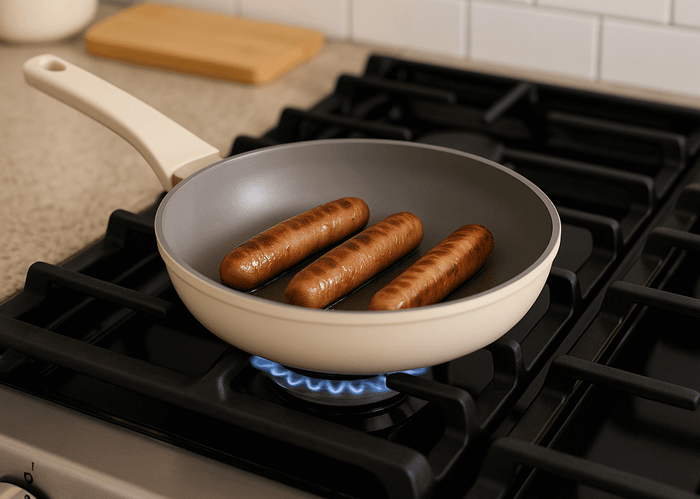
If you’ve been wondering “Is ceramic cookware worth it?”, you’re not alone. Ceramic pans have become a favorite for home cooks who want easy cleanup, consistent heating, and a smooth nonstick surface that performs well for everyday meals. But like any cookware, ceramic has strengths and limitations worth understanding before you invest.
Here’s a simple breakdown to help you decide if ceramic cookware is right for your kitchen.
What Is Ceramic Cookware?
Ceramic cookware typically refers to metal pots and pans—usually aluminum—coated with a ceramic-based nonstick layer. This coating is made from sand-derived materials and gives the cookware its signature slick, glossy surface.
The result is lightweight cookware that heats quickly and delivers a naturally smooth release.
Pros of Ceramic Cookware
1. Naturally Nonstick and Easy to Clean
Ceramic coatings offer a smooth, slick surface that makes cooking eggs, pancakes, and delicate foods easier. Most foods slide right out without sticking, and cleanup usually requires just a gentle wipe.
2. Heats Quickly and Evenly
Ceramic pans typically warm up fast thanks to their aluminum cores. This makes them great for quick weeknight meals or sautéing vegetables without waiting for the pan to preheat forever.
3. Lightweight and Easy to Handle
Compared to cast iron or stainless steel, ceramic cookware is noticeably lighter. This is ideal for small kitchens, busy families, or anyone who prefers cookware that doesn’t feel heavy in the hand.
4. Versatile for Everyday Cooking
Ceramic cookware handles a wide range of cooking styles—sautéing, simmering, searing, and reheating. It's especially useful for low- and medium-heat cooking, which helps maintain the coating.
Cons of Ceramic Cookware
1. Not Ideal for High-Heat Cooking
Ceramic coatings perform best at low to medium temperatures. High heat can shorten the lifespan of the coating and impact food release.
2. Shorter Lifespan Compared to Metal-Based Nonstick
While ceramic coatings are durable for everyday use, they generally don’t last as long as traditional PTFE nonstick when used heavily. Gentle care extends their life significantly.
3. Can Scratch Without Proper Utensils
Metal utensils or abrasive sponges can scratch the surface over time. Silicone, wood, or nylon tools help keep ceramic coatings smooth and long-lasting.
4. Not All Ceramic Cookware Is the Same
Quality varies widely. Thicker bases, solid construction, and a well-bonded coating make a big difference in performance and durability.
How to Get the Best Performance from Ceramic Cookware
To make ceramic cookware worth the investment, a little care goes a long way:
Stick to low or medium heat
Use non-metal utensils
Let pans cool before washing
Avoid cooking sprays that can leave residue
Hand wash when possible for longer-lasting results
These habits help preserve the coating and keep your pans working beautifully for years.
So, Is Ceramic Cookware Worth It?
Yes—ceramic cookware is worth it for home cooks who want easy cleanup, fast heating, and reliable everyday performance, especially for low-to-medium heat cooking. It’s lightweight, versatile, and user-friendly, making it a smart choice for busy households and anyone who appreciates a smooth nonstick surface.
If you know what to expect and take care of it properly, ceramic cookware can be a valuable addition to your kitchen.